

Ever wondered what is the difference between Frontend vs Backend? Read this article to find out more. The world of web development continues to evolve rapidly. In 2025, businesses, creators, and learners depend more than ever on the internet to share information, provide services, and build global connections. Websites and apps are no longer simple tools—they are powerful digital experiences that shape how we learn, work, shop, and communicate. As a result, more people are choosing careers in technology, especially in web development. But before starting that journey, new developers often face a big question: which path is right for them? Should they specialise in frontend or backend development?
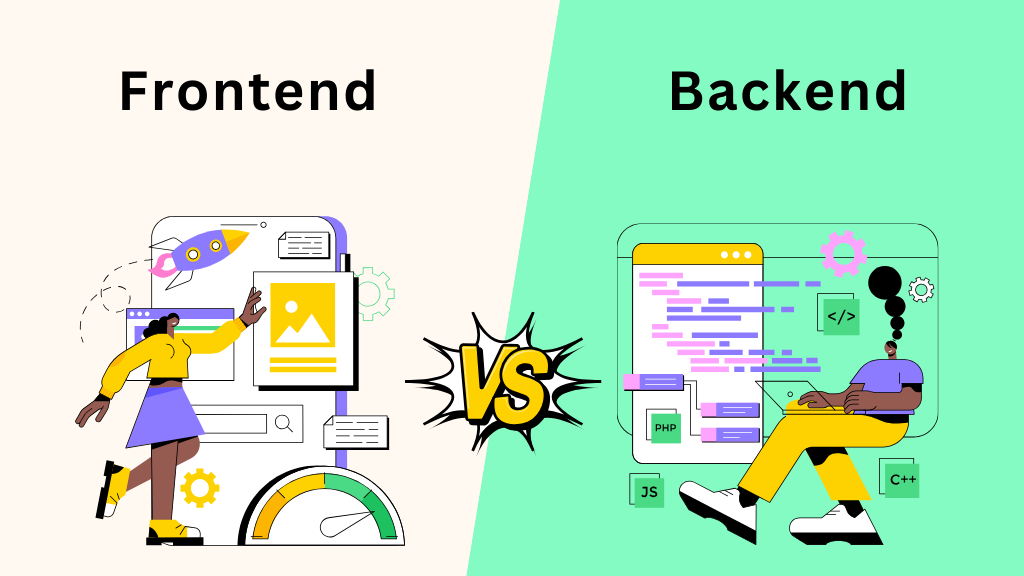
Understanding Frontend vs Backend is essential for anyone stepping into the world of web development. These two areas work together to create the websites and software we use daily, yet they involve different skills, mindsets, and responsibilities. Whether you want to design interactive interfaces, build fast and dynamic systems, or pursue full-stack development, choosing the right path can significantly shape your future.
This guide will help you understand the differences between frontend and backend development, the skills required for each, the career opportunities available, and how to make the right decision for your goals in 2025.
Understanding the meaning of Frontend vs Backend
To understand your career options, you first need to know what the two sides of development actually mean.
Frontend refers to everything users see and interact with on a website or app. This includes layout, design, colours, navigation, animations, and responsiveness. When you open a webpage, click a button, or scroll through content, the frontend controls those experiences. Frontend developers focus on creating smooth, user-friendly, visually appealing interfaces that feel natural to the user.
Backend refers to the behind-the-scenes logic, servers, databases, user authentication, security, and data processing that power a website or app. Even though you can’t see backend work directly, it’s essential for storing information, connecting users, and making the frontend function correctly.
Understanding Frontend vs Backend makes it easier to discover your strengths. The frontend appeals to creative, visual thinkers, while the backend attracts logical, analytical problem-solvers. Both roles are important, and both offer strong career paths.
The role of a frontend developer in 2025
Frontend developers are responsible for the appearance and behaviour of a website or application. They make sure that everything the user interacts with is clear, responsive, attractive, and easy to understand. This makes frontend development ideal for people who enjoy both technology and design.
What frontend developers do
Frontend developers work closely with designers to create layouts and visual elements. They write code that determines how buttons, forms, images, text, menus, and animations appear. They also ensure that websites work well on different devices, screen sizes, and browsers.
Essential frontend skills in 2025
The core tools of frontend development remain important today:
HTML
CSS
JavaScript
Beyond these basics, modern frontend developers often work with libraries and frameworks such as:
React
Vue
Angular
Tailwind
Next.js
They also need to understand responsive design, user experience fundamentals, and accessibility. Because 2025 brings more mobile users, frontend developers must build interfaces that work smoothly on phones, tablets, and all screen shapes.
Why people choose frontend
Many learners choose frontend development because it offers immediate results. When you write HTML, CSS, or JavaScript, you can see the outcome instantly. This feedback makes learning engaging. It appeals to visual thinkers who enjoy combining creativity with technical skills.
The role of a backend developer in 2025
While frontend developers focus on what users see, backend developers handle everything that users don’t see. This includes managing databases, building APIs, processing requests, handling user accounts, and ensuring security. Backend development keeps websites functioning reliably.
What backend developers do
A backend developer designs and maintains the logic behind an application. They ensure that data is stored correctly, retrieved accurately, and delivered safely to the frontend. They also build features like login systems, dashboards, automations, and payment gateways.
Essential backend skills in 2025
Backend developers use programming languages and frameworks such as:
Python
Node.js
PHP
Ruby
Java
Go
C# (.NET)
They also work with databases like:
MySQL
PostgreSQL
MongoDB
Firebase
Redis
Backend developers must understand servers, cloud computing, APIs, authentication, security, and scalability. As industries depend more on data-driven systems in 2025, backend roles continue to expand.
Why people choose backend
Many developers choose backend work because they enjoy logical thinking, problem-solving, and creating powerful systems. Backend developers often work with large amounts of data and complex workflows. They also contribute heavily to performance, automation, and security.
Frontend vs Backend: Key differences new developers should understand
Comparing Frontend vs Backend helps you understand how both sides contribute to building modern web experiences.
1. Visual vs Logical work
Frontend involves visual creativity, layout design, and user interface behaviour. Backend involves logic, data structures, and system architecture.
2. Tools and languages
Frontend developers primarily use HTML, CSS, and JavaScript. Backend developers use languages like Python, PHP, Node.js, or Java, along with databases and servers.
3. User interaction vs behind-the-scenes
Frontend developers build what users directly see. Backend developers build everything that quietly powers the experience.
4. Design focus vs system focus
Frontend requires attention to design, user experience, and responsiveness. Backend requires understanding logic, data flow, and performance.
5. Different learning styles
Visual learners often prefer frontend. Analytical learners often prefer backend.
Understanding these differences makes it easier to choose your path based on your natural strengths.
Frontend vs Backend: Which one is easier to learn?
Many beginners ask which side of development is easier. The truth is that both are accessible, but your learning experience depends on your interests.
Why some find frontend easier
The visual nature of frontend helps beginners see progress quickly. HTML and CSS are beginner-friendly because they use human-readable language. JavaScript introduces logic, but you can learn it gradually.
Why some find backend easier
Backend makes sense to people who enjoy logical puzzles, problem-solving, and working with data. Writing algorithms and building systems feels natural for analytical thinkers.
The best choice depends on your personality
When choosing between Frontend vs Backend, consider how you prefer to learn, what excites you, and what feels comfortable. Many developers experiment with both before specialising.
Career opportunities in frontend development
Frontend developers continue to be in high demand in 2025. Every business, school, organisation, and creator needs a functional and attractive online presence.
Popular frontend roles include
Frontend Developer
UI Developer
Web Designer
Frontend Engineer
React Developer
Email Developer
Mobile Web Interface Developer
Industries that hire frontend developers
Tech companies
Marketing agencies
E-commerce businesses
Digital publishers
Startups
Education platforms
With more companies moving online, frontend developers remain essential for building modern digital experiences.
Career opportunities in backend development
Backend developers also enjoy strong career opportunities. They manage systems, automation, security, and the logic that keeps digital platforms executing correctly.
Popular backend roles include
Backend Developer
API Developer
Database Engineer
Software Engineer
Cloud Developer
DevOps Engineer
Systems Architect
Industries hiring backend developers
Finance
Healthcare
Government
Retail
AI and machine learning companies
Cybersecurity firms
Large data-driven businesses
Backend developers often work on complex, high-impact systems that require accuracy and reliability.
Full-stack development: Combining both worlds
Full-stack developers work on both the frontend and backend. They understand how visual elements interact with server logic and databases. This makes them extremely versatile.
Why full-stack is popular in 2025
Startups prefer full-stack developers who can handle entire projects. Companies need flexible professionals who understand both sides of the Frontend vs Backend equation. Full-stack developers can prototype quickly, troubleshoot effectively, and bridge communication between design and engineering teams.
Skills full-stack developers learn
HTML
CSS
JavaScript
One or more backend languages
Frameworks
Databases
APIs
Deployment tools
Cloud services
While this path requires more learning, it also offers more opportunities and career flexibility.
Salaries: Frontend vs Backend in 2025
Salaries for both frontend and backend roles are strong, but backend roles often pay slightly higher because they require deeper technical knowledge and affect system structure. However, salary differences vary based on experience, region, and expertise.
Typical salary trends
Frontend developers usually earn strong income because they directly shape user experience. Backend developers often earn slightly more due to complexity and system responsibility. Full-stack developers often fall between the two or above both because of their wide-ranging skills.
How to choose between frontend and backend in 2025
Choosing your path depends on your personality, goals, and interests.
Choose frontend if you:
Enjoy visual design
Like working with colours, layouts, and interfaces
Prefer immediate, visible results
Have an interest in user experience
Enjoy combining creativity with technology
Choose backend if you:
Enjoy logical problem-solving
Prefer working with data and structure
Like automation, databases, and algorithms
Are fascinated by performance and security
Want to build systems behind the scenes
Try both before deciding
When exploring Frontend vs Backend, many learners test both areas with small projects. Building a simple website helps you understand frontend. Creating a small API or database helps you understand backend. Once you try both, the path often becomes obvious.
Final thoughts: Choosing your direction for the future
In 2025, the web development field continues to expand. Both frontend and backend roles are essential, rewarding, and full of opportunities. Your choice should not be based on difficulty but on what energises you, what inspires you, and what aligns with your career goals. Understanding Frontend vs Backend allows you to make a confident decision about your learning journey. Whether you choose the visual, interactive world of frontend or the powerful, logical world of backend, you are choosing a career path that will remain valuable for years to come.
Educodes Practice Hub
The EduCodes Practice Hub is your starting point for real, hands-on learning. Each exercise helps you understand how HTML works through simple, interactive practice that builds your confidence step by step. Begin exploring today and see how easy and enjoyable learning to code can be.